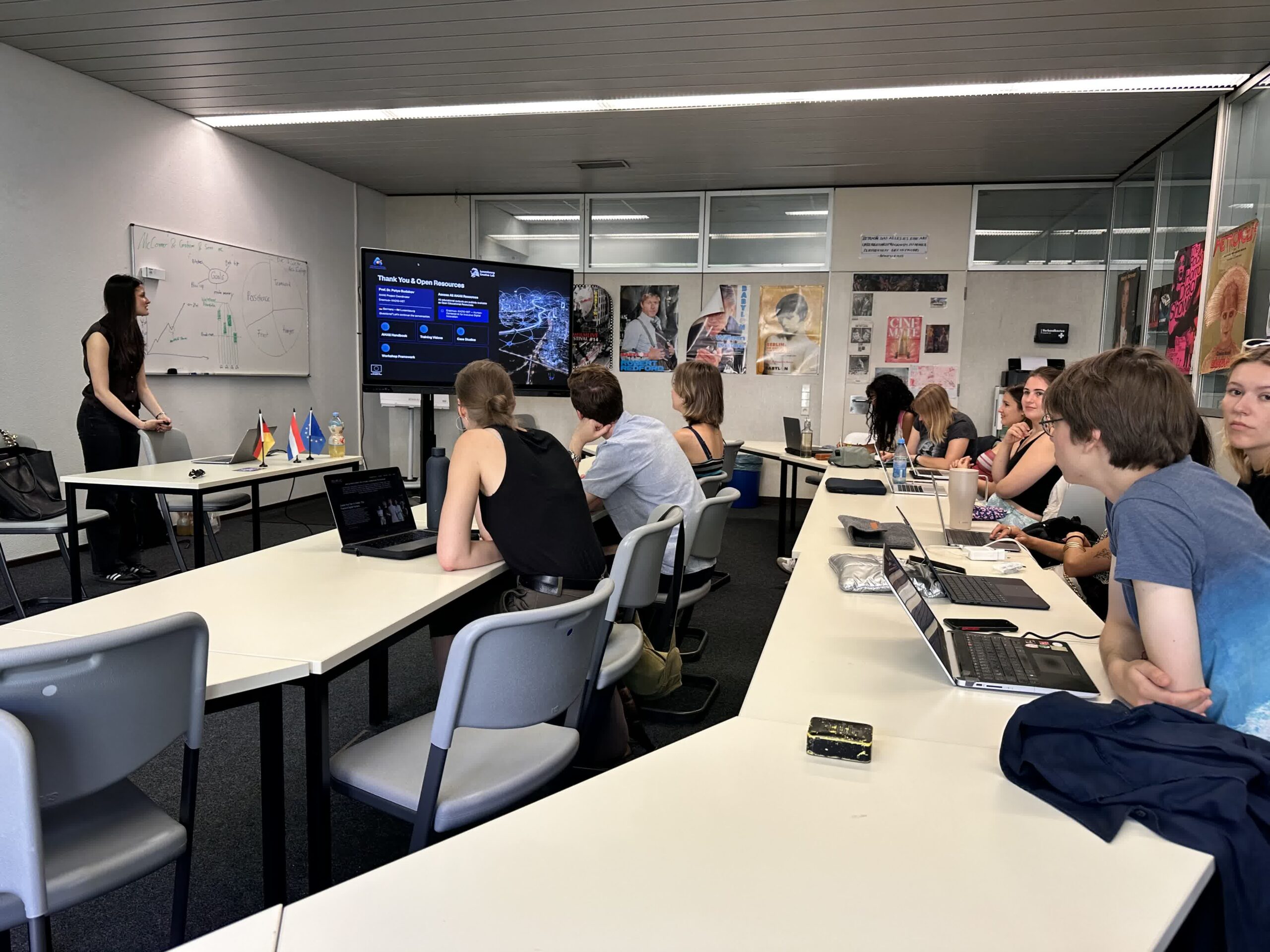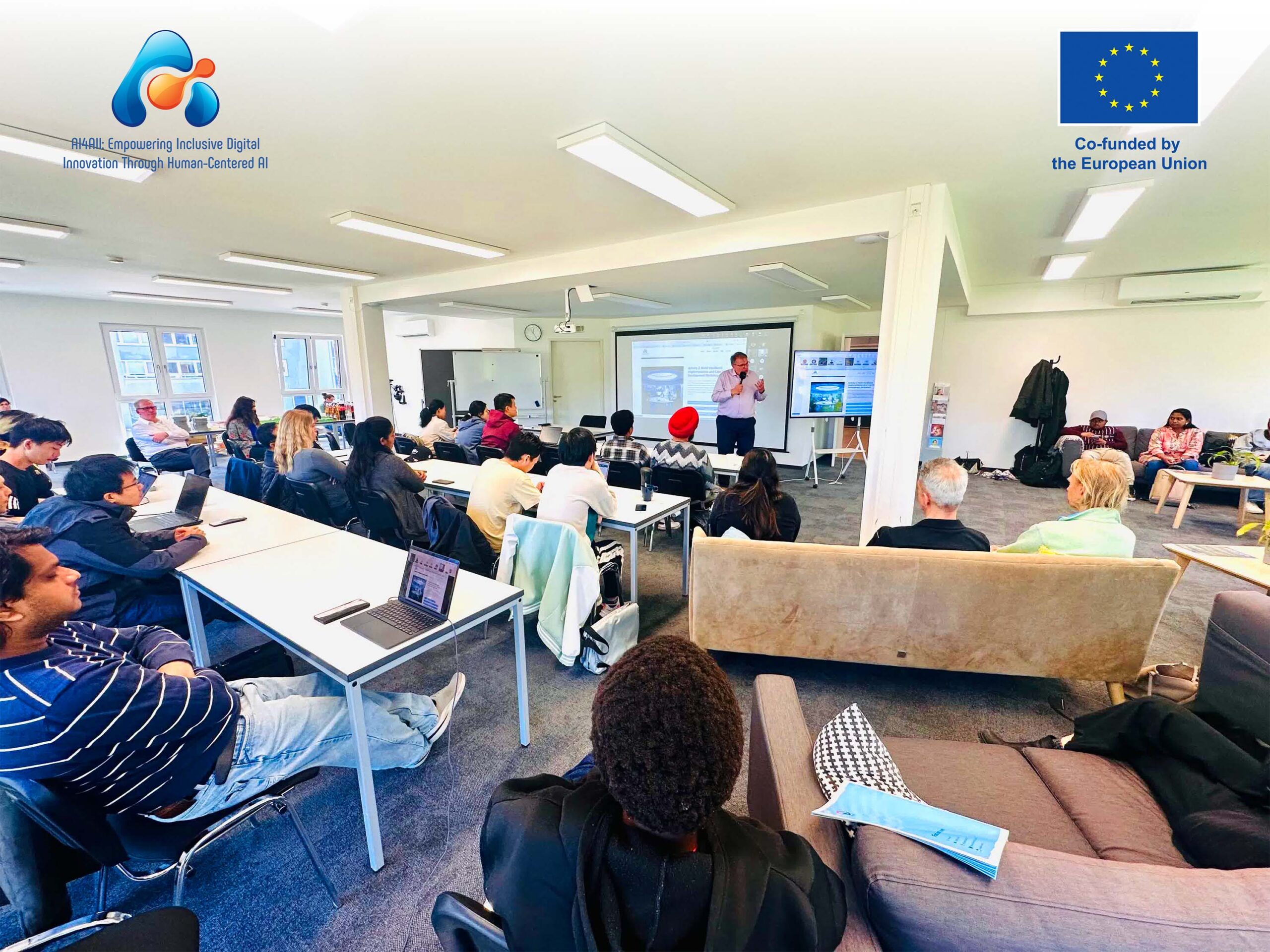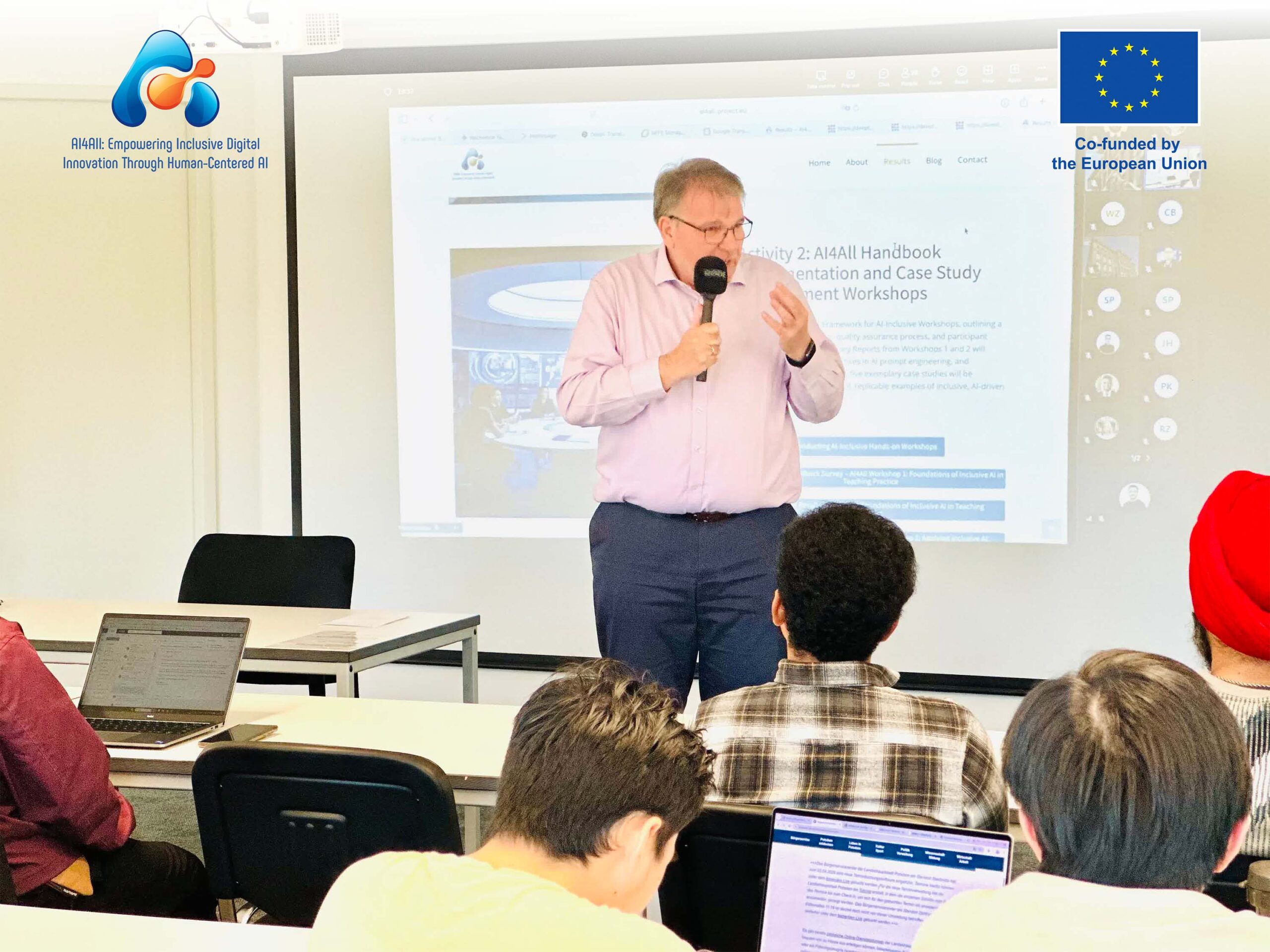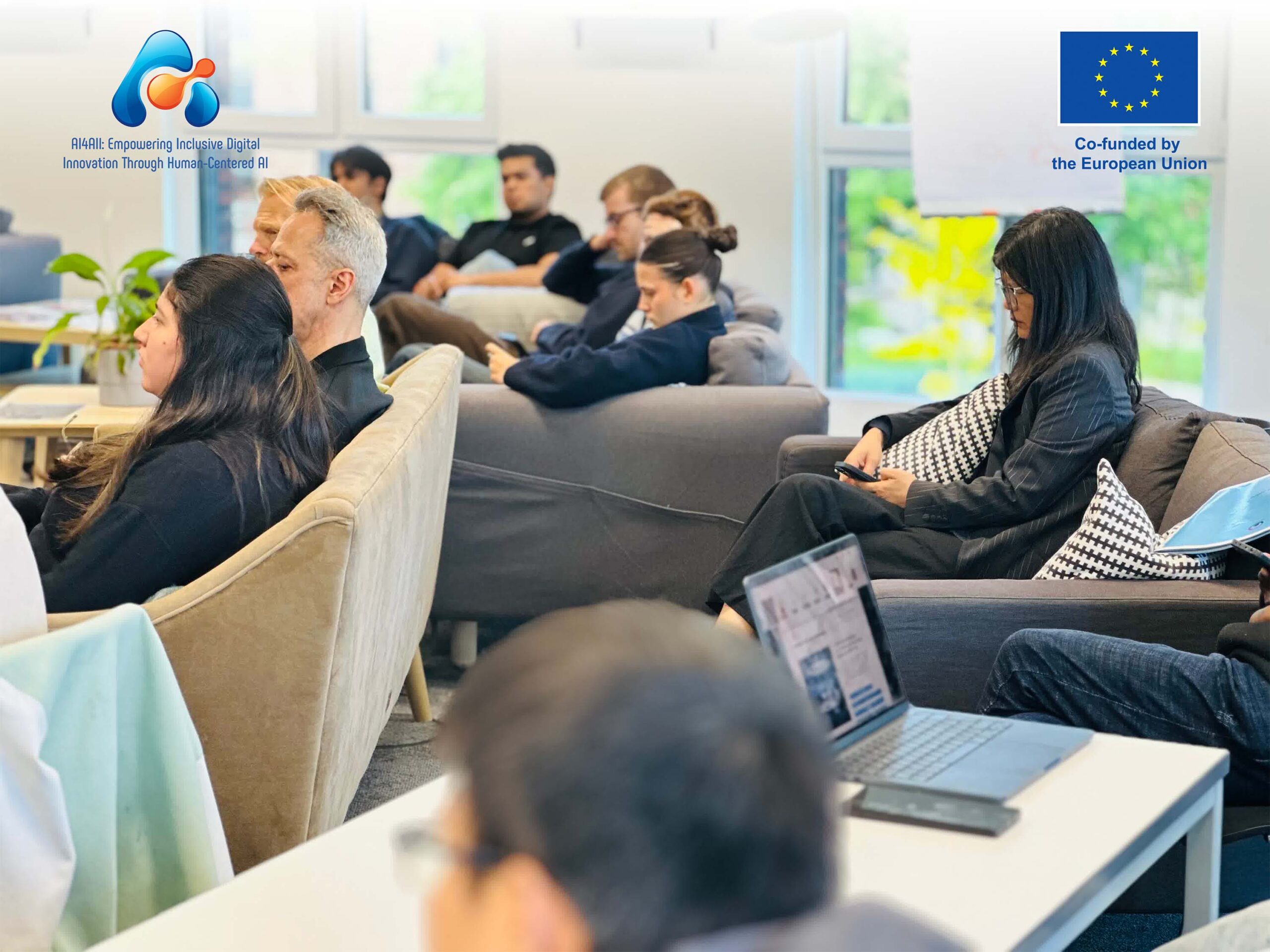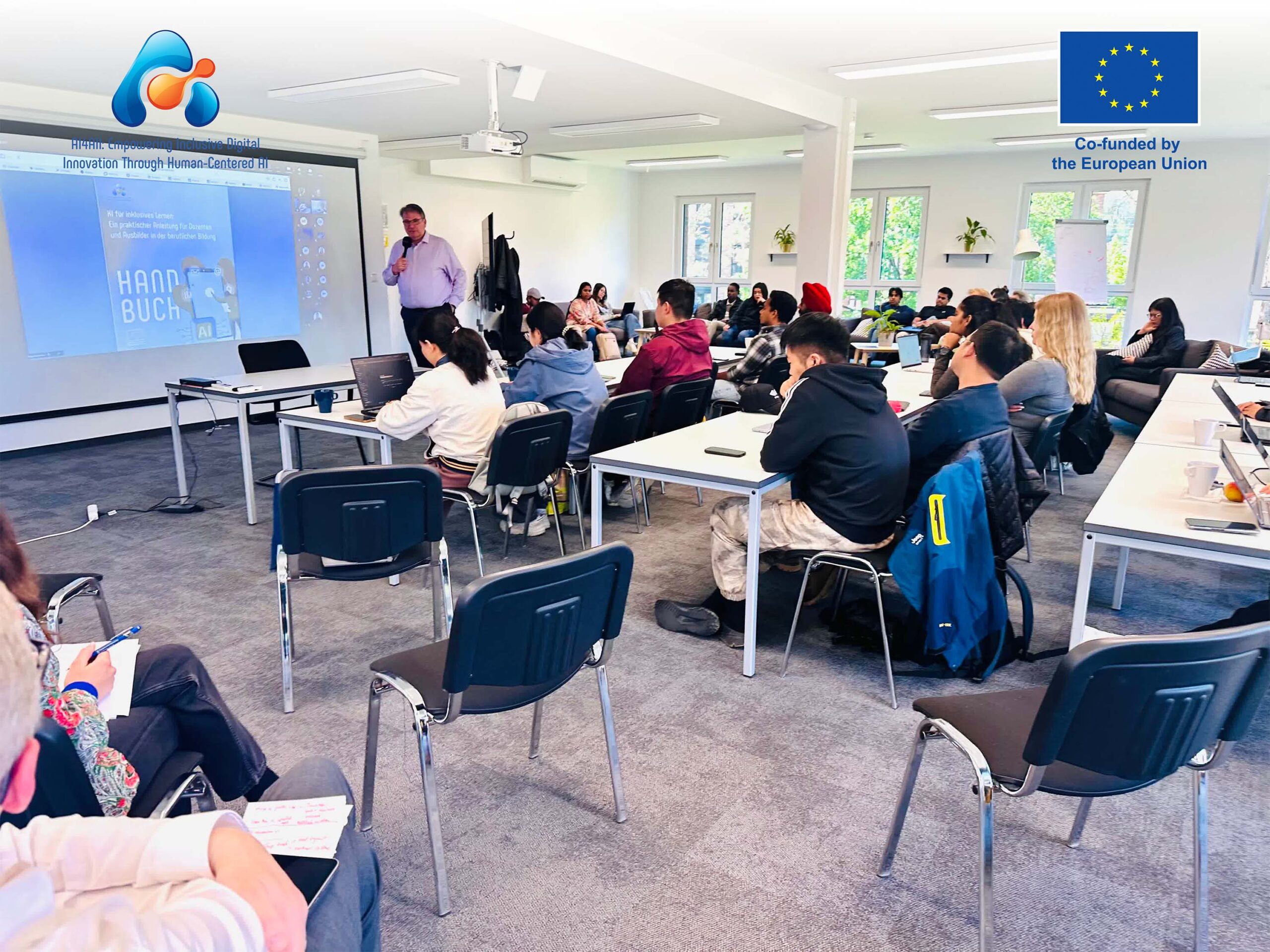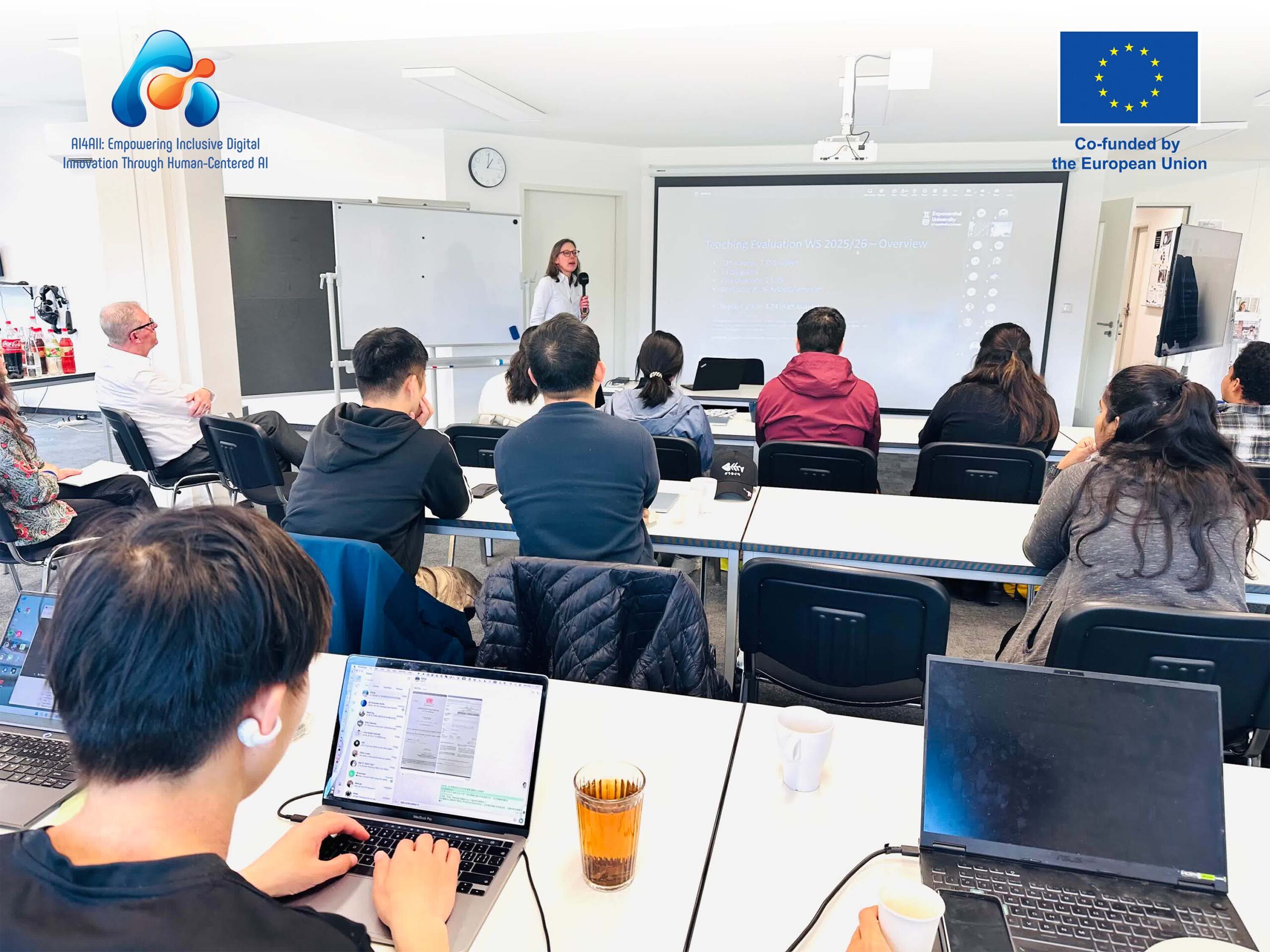
On 4 June 2026, XU Exponential University of Applied Sciences in Potsdam, Germany, successfully hosted the German National Conference of the Erasmus+ co-funded project AI4All: Empowering Inclusive Digital Innovation Through Human-Centered AI (Project No: 2025-1-DE02-KA210-VET-000351968).
Organized as part of Activity 3: AI4All Launch Conference & Outreach, the event brought together educators, trainers, students, AI experts, entrepreneurs, creative professionals, and institutional representatives to explore the growing role of inclusive and human-centered Artificial Intelligence in Higher Education and Vocational Education and Training (VET).
The conference served as an important platform for disseminating project results, fostering dialogue among stakeholders, and promoting practical approaches to the responsible and accessible use of AI in educational environments.
Presenting the AI4All Results
A central objective of the conference was to introduce participants to the key outputs developed during the project and demonstrate their practical application in teaching, learning, and training contexts.
Participants were presented with the AI4All Handbook, AI for Inclusive Learning: A Practical Guide for Faculty and VET Trainers, which provides practical guidance for integrating AI technologies into inclusive educational settings. The conference also showcased the Framework for Conducting AI-Inclusive Hands-on Workshops, developed to support educators and trainers in delivering engaging and accessible AI learning experiences.
Additional project outputs presented during the event included:
- Workshop implementation methodologies and outcomes;
- AI-driven accessibility approaches;
- Prompt engineering techniques for educational applications;
- Exemplary Case Studies illustrating real-life educational scenarios;
- Recommendations for ethical and human-centered AI adoption.
Through practical demonstrations and examples, participants explored how these resources can be applied to create more accessible, personalized, and inclusive learning experiences.
Expert Contributions and Discussions
The conference featured presentations from members of the AI4All consortium and invited experts.
The opening session was led by Prof. Dr. Stefan Stein, President of XU Exponential University of Applied Sciences, and Prof. Dr. Petyo Budakov, Vice President Teaching and Project Coordinator of AI4All. Their presentations highlighted the increasing importance of responsible AI implementation and the need to ensure that technological innovation remains aligned with human values, accessibility principles, and educational needs.
Further sessions addressed topics such as:
- AI-driven accessibility and inclusion;
- Human-centered AI design;
- Prompt engineering for education;
- Future skills and employability;
- Ethical considerations in AI adoption;
- Opportunities for collaboration between Higher Education, VET, and industry.
Participants actively contributed to discussions, sharing experiences and perspectives on the opportunities and challenges associated with AI integration in educational settings.
Encouraging Stakeholder Engagement
An important part of the conference was dedicated to the presentation of the AI4All Engagement Strategy, which aims to foster long-term collaboration among educators, industry experts, policymakers, and other stakeholders.
The strategy outlines practical mechanisms for maintaining stakeholder involvement beyond the project duration and supports the sustainable adoption of project outcomes. Discussions focused on how educational institutions and professionals can continue exchanging knowledge, sharing good practices, and collaborating on future initiatives related to inclusive AI.
The conference also provided opportunities for networking and community building, enabling participants to establish new professional connections and explore potential future collaborations.
Positive Feedback and Strong Participation
The event attracted 26 participants, exceeding the minimum target established within the project proposal. The audience represented a diverse range of professional backgrounds, including Higher Education, Vocational Education and Training, digital innovation, creative industries, entrepreneurship, and public administration.
Participant feedback was highly positive, with attendees particularly appreciating:
- The practical nature of the project results;
- The relevance of the case studies;
- The focus on accessibility and inclusion;
- The opportunities for interaction and discussion;
- The applicability of prompt engineering techniques in educational contexts.
The conference evaluation demonstrated a high level of satisfaction and confirmed the relevance of AI4All outputs for educational professionals seeking practical and responsible ways to integrate AI into their work.
Building the Future of Inclusive AI
The German National Conference marked an important milestone in the implementation of AI4All. Beyond presenting project results, the event contributed to building a growing community of educators, trainers, innovators, and decision-makers committed to ensuring that Artificial Intelligence remains inclusive, accessible, ethical, and human-centered.
As AI continues to transform education and society, initiatives such as AI4All play an essential role in ensuring that technological innovation benefits all learners and supports equal opportunities for participation and success.
The AI4All consortium would like to thank all participants, speakers, and stakeholders who contributed to the success of the conference and looks forward to continuing the dialogue through future project activities and collaborations.
Funded by the European Union. Views and opinions expressed are however those of the author(s) only and do not necessarily reflect those of the European Union or the European Education and Culture Executive Agency (EACEA). Neither the European Union nor EACEA can be held responsible for them.
Project No: 2025-1-DE02-KA210-VET-000351968