Why Workshop 1 Matters in Activity 2
Workshop 1 is the first practical implementation step in Activity 2 of the AI4All project. While Activity 1 developed the AI4All Handbook and short-burst training videos, Activity 2 is dedicated to validating these resources in real training environments and transforming guidance into practical, replicable teaching practice.
Workshop 1 is designed to build a shared foundation for inclusive and ethical AI use in education, while developing baseline competences that participants will further refine in Workshop 2. It also serves as a piloting environment to test the AI4All workshop framework in a real institutional context, enabling the consortium to collect structured feedback and translate it into improvements for the workshop design, case study development, and the broader AI4All training resources.
Workshop Title and Focus
Foundations of Inclusive AI in Teaching Practice: Inclusive Prompt Engineering for Accessible Digital Learning Content
The workshop focuses on how prompt engineering can support the development of accessible digital learning content and inclusive learning experiences, without crossing ethical, academic, or institutional boundaries. The session positions AI as a supportive and assistive tool that can strengthen accessibility-by-design and responsible digital education—especially in higher education and vocational education and training contexts.
Pedagogical Approach: How the Workshop Was Designed
Workshop 1 follows the “Framework for Conducting AI-Inclusive Hands-on Workshops” developed under Activity 2 by XU Exponential University of Applied Sciences (Germany) and Luxembourg Creative Lab (Luxembourg). The methodology is rooted in competence-based learning and structured as a guided learning journey that balances short conceptual inputs with hands-on experimentation and reflection.
Key methodological principles applied throughout Workshop 1 include:
Competence-based learning
Participants develop practical and transferable competences rather than tool-specific habits. Workshop 1 introduces and actively develops the baseline layer of the five AI4All competences:
Advanced AI literacy in pedagogy
Expertise in AI prompt engineering
Inclusive digital content creation
Data-driven personalisation skills (introduced conceptually)
Ethical and responsible AI integration
Universal Design for Learning (UDL) principles
Accessibility and inclusion are embedded into the learning design rather than treated as add-ons. Multiple means of representation, engagement, and expression are used through demonstrations, discussion, and active practice.
Learning-by-doing and micro-iteration
Participants work with AI in practical scenarios, test outputs, reflect on quality and accessibility, and iteratively refine prompts and content based on feedback.
AI as a learning partner, not a shortcut
A strong emphasis is placed on transparency, academic integrity, ethical use, and risk awareness (bias, data protection, misuse, and misrepresentation).
Workshop Structure and Planned Activities
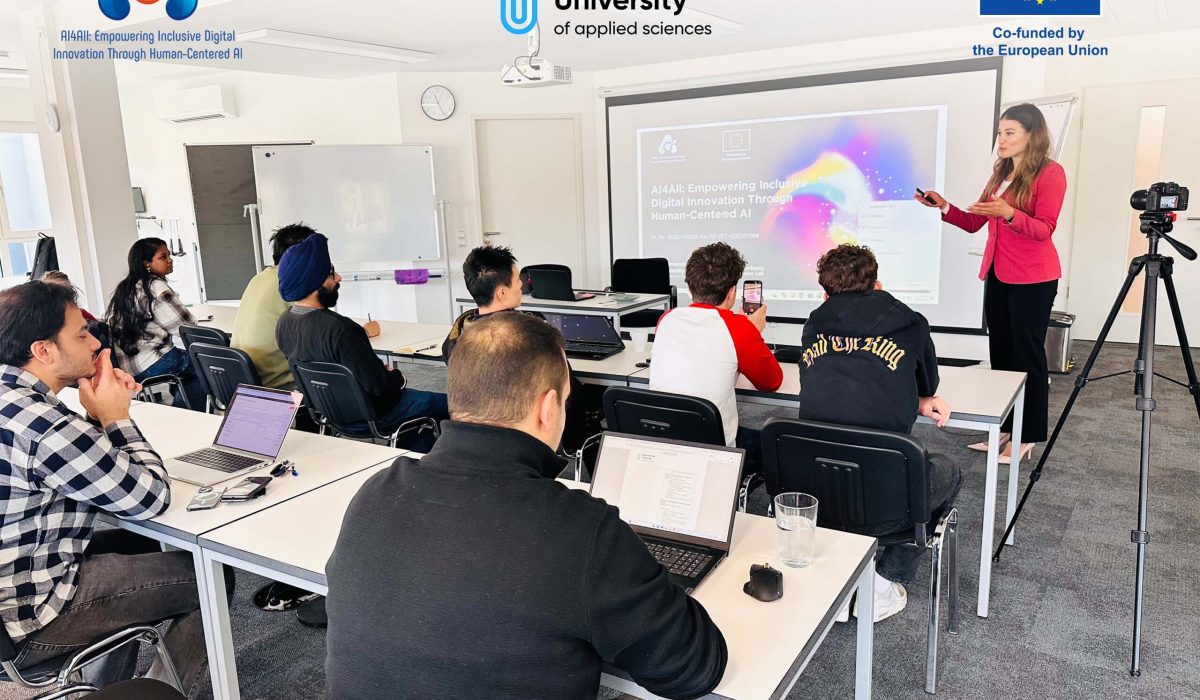
Workshop 1 consists of four interconnected parts that mirror the internal structure defined in the AI4All Workshop Framework: introduction and context setting, targeted conceptual input, hands-on practice, and reflection and consolidation.
1) AI in Education: From Ideas to Practice (15 minutes)
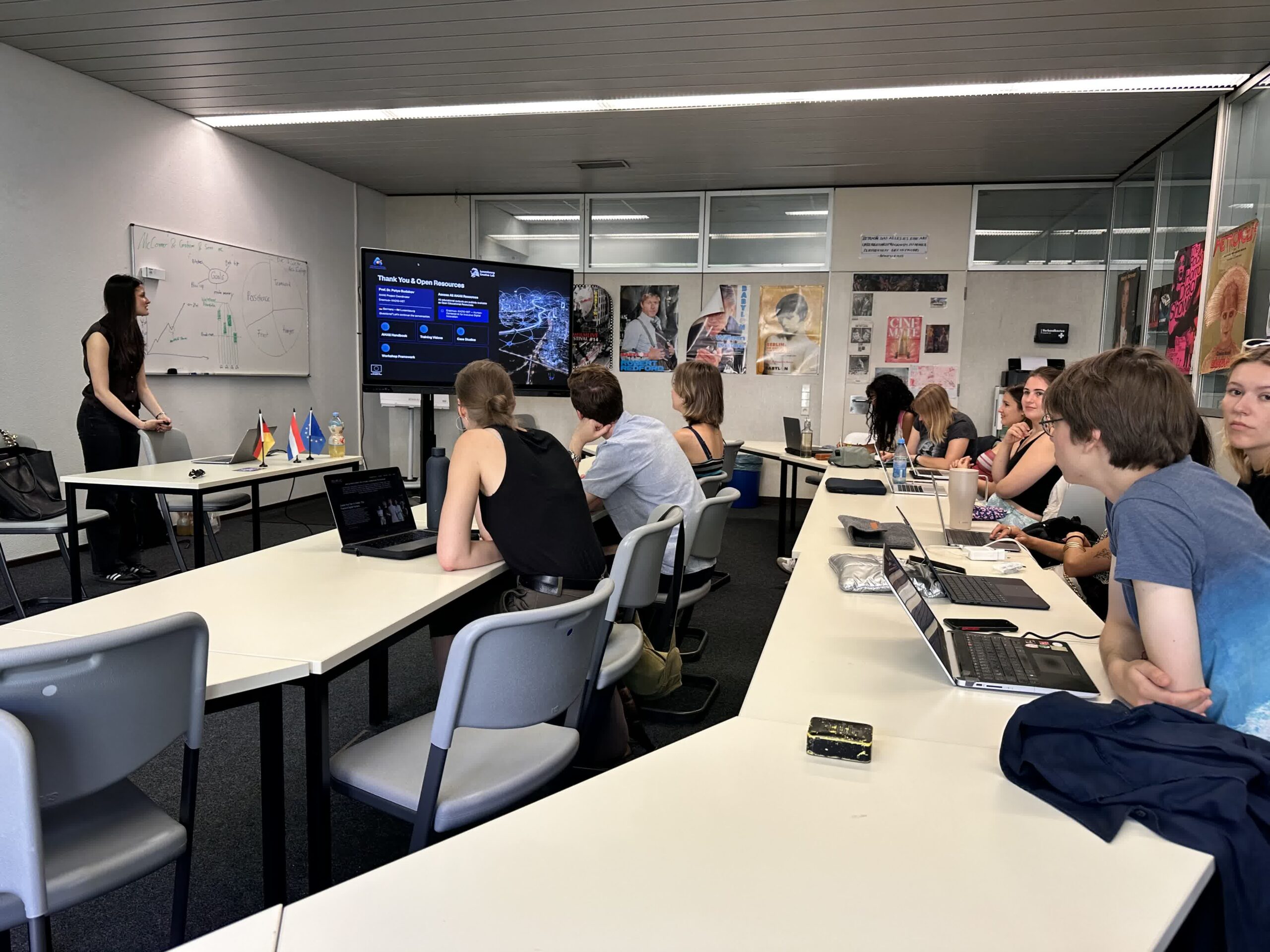
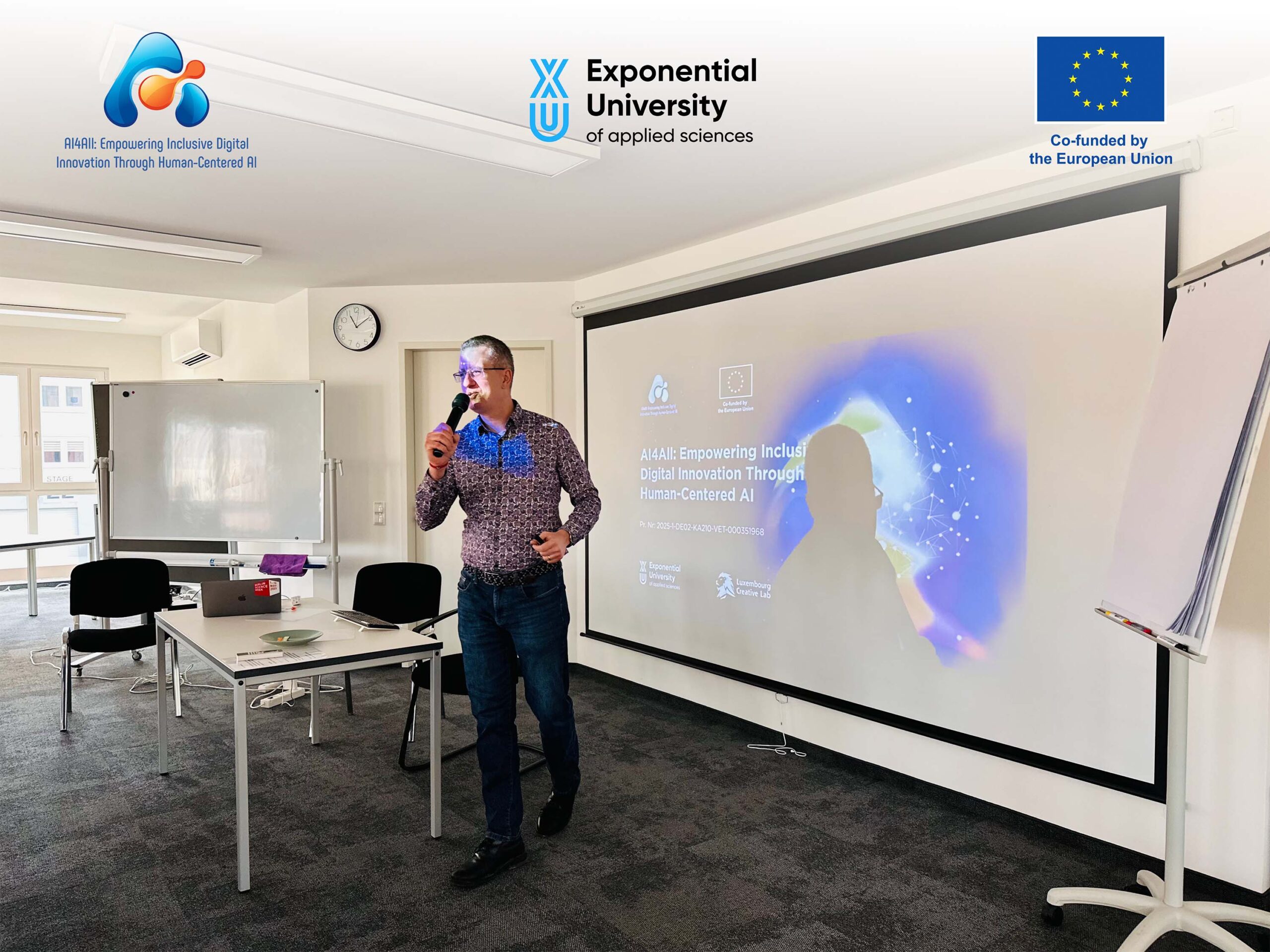
Speaker: Prof. Dr. Petyo Budakov
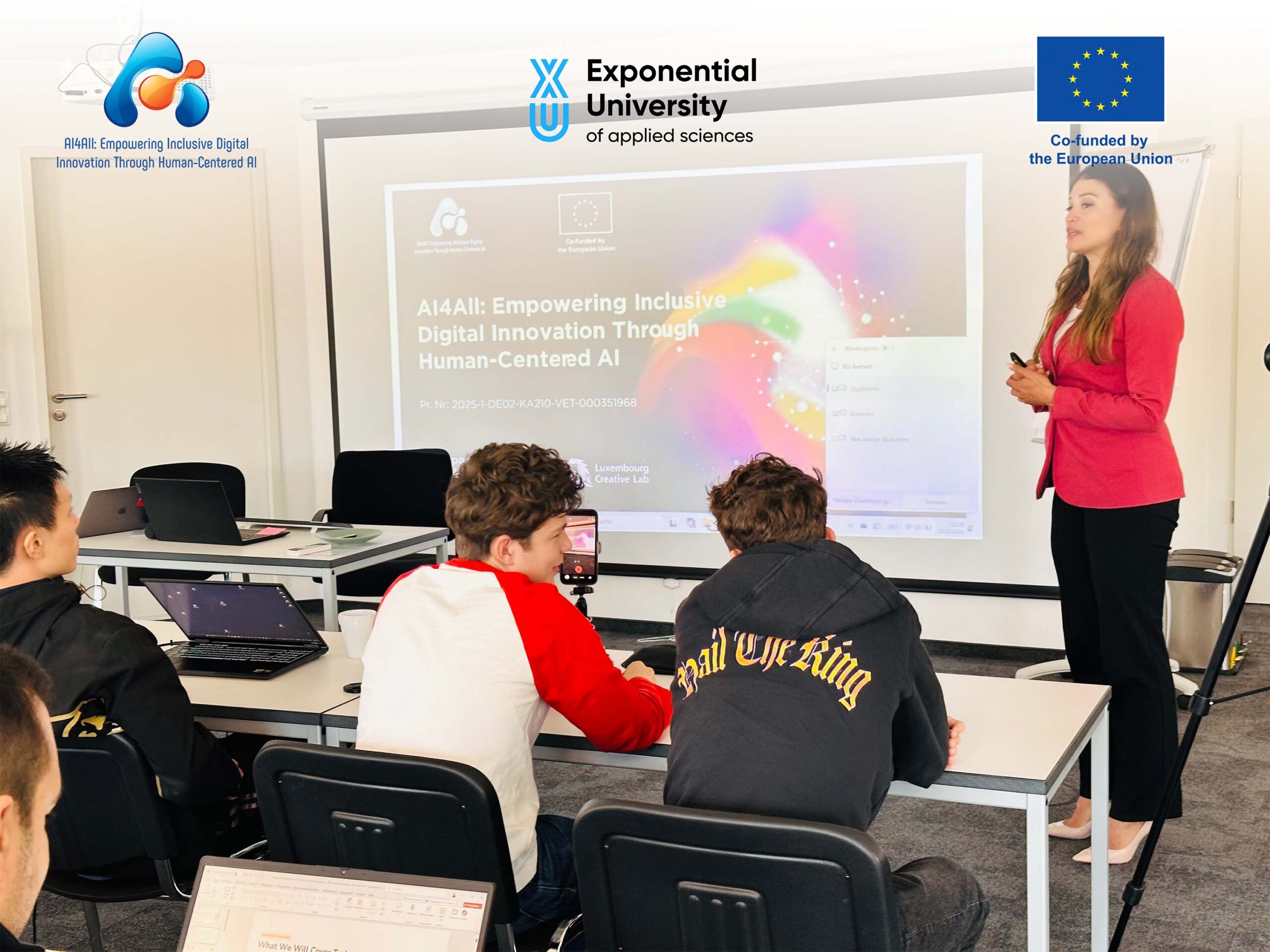
This opening segment set a shared frame for the workshop and clarified the link between the session, Activity 2, and the broader objectives of AI4All.
Planned and piloted activities included:
Introducing what AI4All is and why inclusive, human-centered AI matters for students and educators
Presenting how the AI4All Handbook and short-burst videos support inclusive learning and accessible digital content creation
Clarifying what participants can expect from the workshop series and how Workshop 1 connects to Workshop 2 and case study development
Establishing expectations for active participation, collaborative learning, and responsible AI use during hands-on exercises
This segment ensured that all participants—regardless of prior AI experience—shared a common understanding of the workshop goals and the practical outcomes expected from Activity 2.
2) AI as a Learning Partner, Not a Shortcut (20 minutes, including interaction)
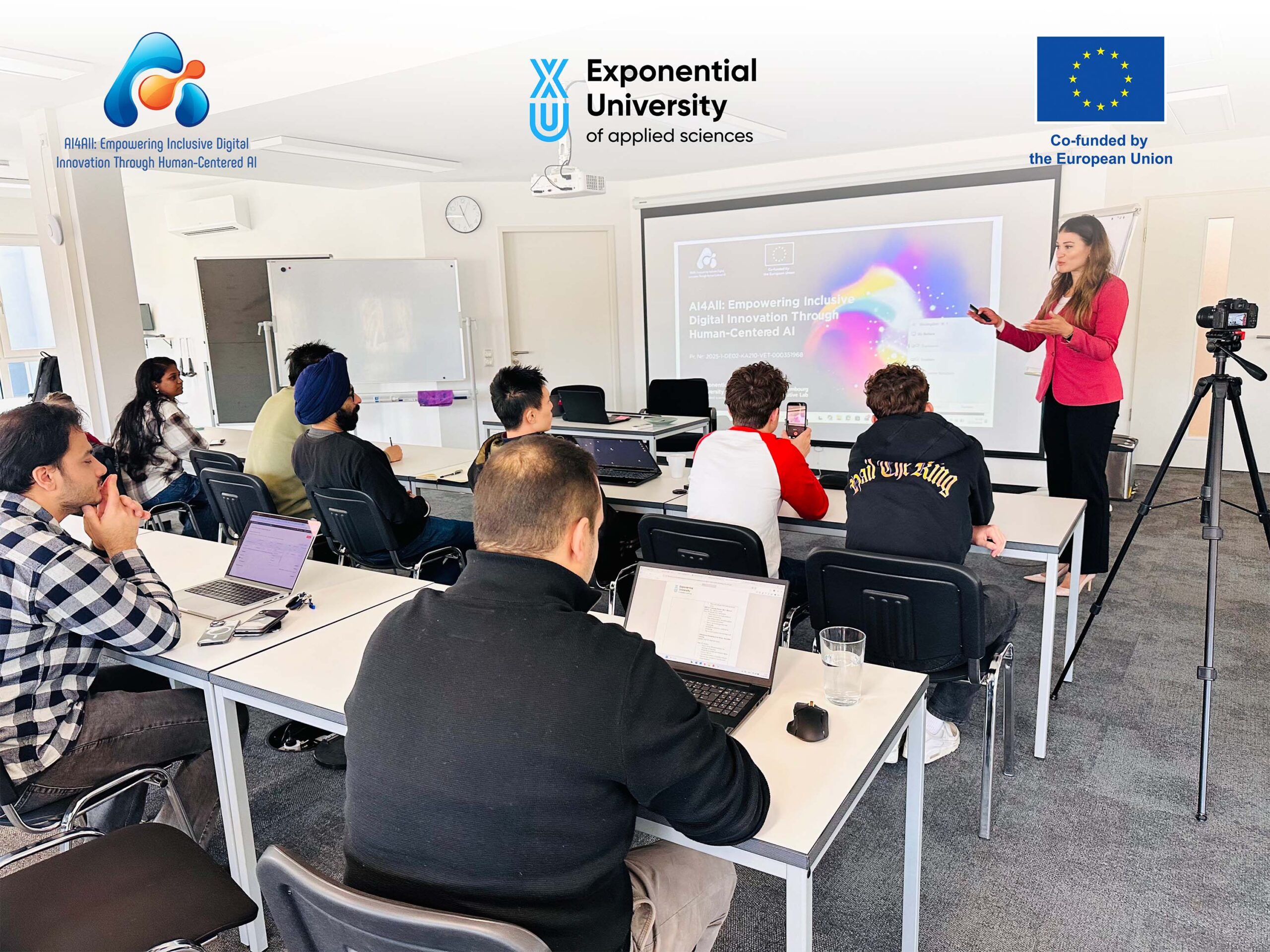
Speaker: Mrs. Debora Correa
This segment translated ethical and institutional principles into practical guidance for day-to-day study and teaching practice.
Planned and piloted activities included:
Defining what ethical AI use means in learning and teaching contexts
Clarifying the difference between legitimate AI-supported learning and academic misconduct
Discussing transparency practices: when and how to disclose AI use appropriately
Comparing examples of ethical vs. unethical prompting, focusing on intent, accountability, and learning value
Providing practical tips for both students and teaching staff on responsible AI usage patterns
The interactive elements allowed participants to test their assumptions, discuss common grey areas, and build confidence in applying ethical reasoning to AI-supported work.
3) Hands-on: Prompting AI for Better, Accessible Learning (45 minutes)
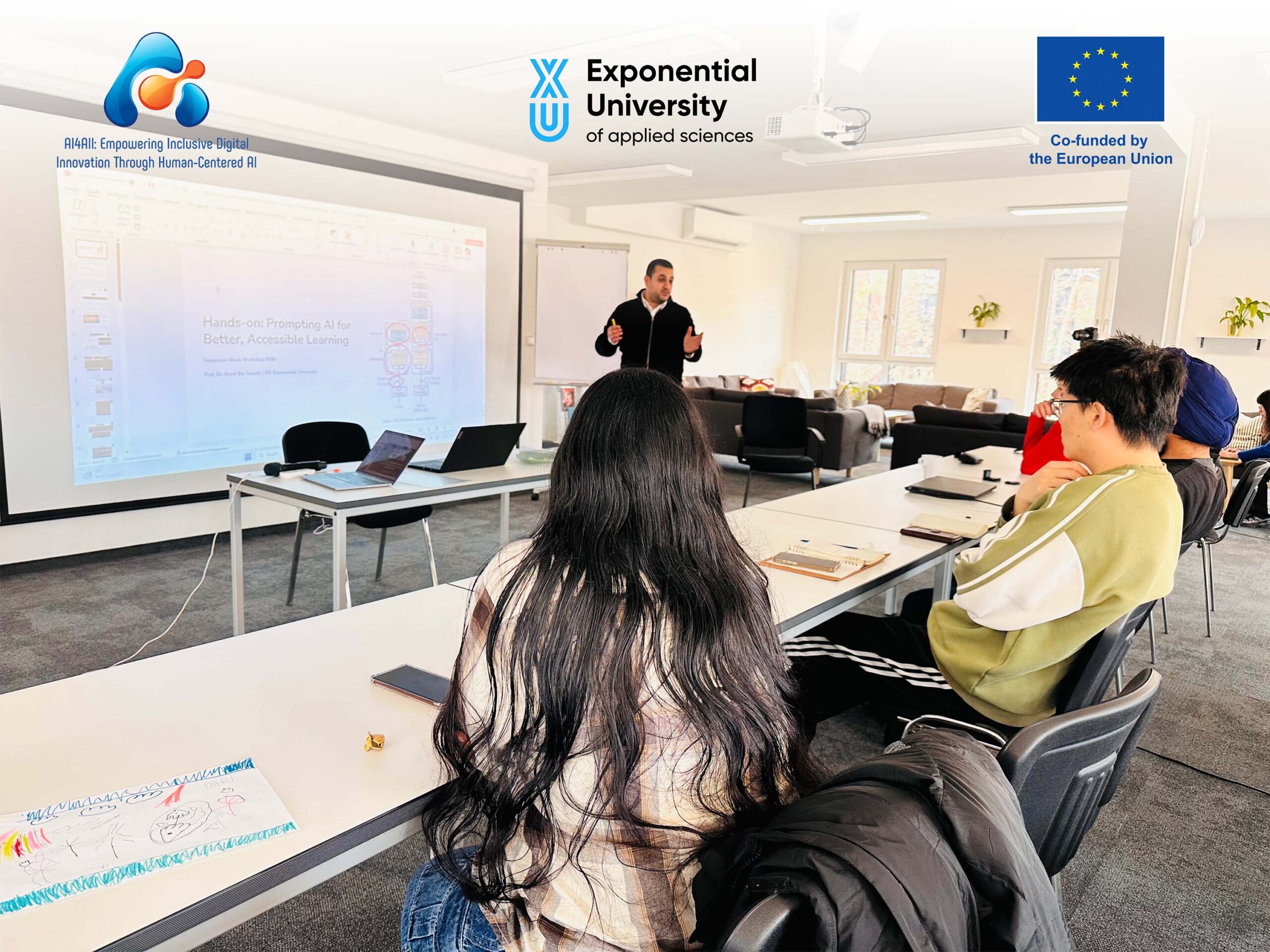
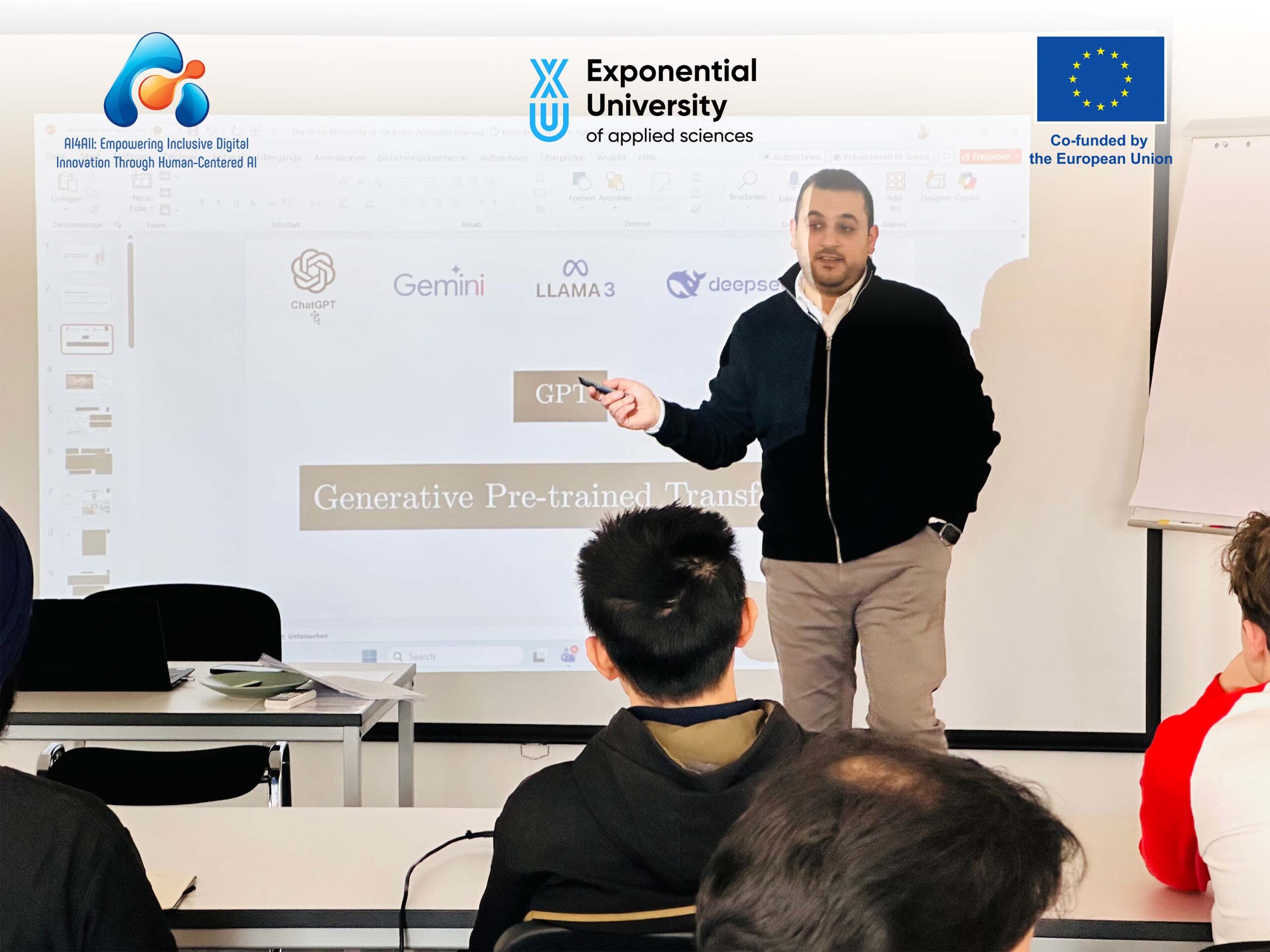
Speaker: Prof. Dr. Raad Bin Tareaf
This hands-on segment formed the core of the workshop’s piloting and methodology validation. Participants learned how to craft prompts that produce useful, accurate, and accessible learning content and how to improve prompts iteratively.
Planned and piloted activities included:
Introducing prompt structures that work well in educational contexts (role, goal, audience, constraints, format, accessibility requirements)
Demonstrating how to prompt AI for accessible and inclusive digital learning content (clear structure, readability, alternatives, simplified language, step-by-step explanations)
Live demonstrations that show the impact of small prompt improvements on content quality and accessibility
Guided participant practice: participants wrote, tested, and refined prompts in real time
Expert feedback loops: participants received targeted feedback on clarity, inclusivity, ethics, and the alignment of outputs with learning objectives
This segment explicitly piloted the framework’s “micro-iteration” approach: test output, reflect, refine, and re-test. The goal was not only to produce better results, but to teach a repeatable method participants can apply in their own teaching and learning scenarios.
4) Open Discussion and Q&A (10 minutes)
This closing segment supported reflection, peer exchange, and feedback capture for continuous improvement.
Planned and piloted activities included:
Sharing questions, challenges, and practical use cases from participants
Reflecting on how AI can support learning and teaching without undermining academic integrity
Identifying topics participants want to deepen in Workshop 2
Gathering input to refine upcoming workshop design and improve AI4All resources
This component serves a dual purpose: it reinforces learning through reflection and supports project-level quality assurance by capturing insights that can shape the next steps of Activity 2.
Piloting Goals: What Was Tested During Workshop 1
Workshop 1 is not only a learning event; it is also a structured pilot aligned with the AI4All framework. The pilot focuses on validating whether the workshop methodology works in a real institutional setting, and whether it produces concrete outputs that can inform Activity 2 deliverables.
Key piloting goals include:
Testing the structure and pacing
The 90-minute format is designed to be concise and effective. The pilot examines whether the balance between conceptual input, hands-on practice, and discussion is adequate for different participant profiles.
Validating competence development
Workshop 1 pilots the baseline level of the AI4All competence framework, especially:
Applied prompt engineering fundamentals
Accessibility awareness in digital content creation
Ethical and responsible AI use practices
Checking transferability and relevance
The workshop is designed to be discipline-agnostic and adaptable across HE and VET settings. The pilot tests whether participants with different roles can apply the methods to their own contexts.
Capturing evidence for improvement
The pilot captures participant feedback and facilitator observations to refine:
workshop instructions and examples
exercises and templates
guidance in the handbook and videos
the transition design between Workshop 1 and Workshop 2
How Workshop 1 Connects to Workshop 2 and Case Study Development
Workshop 1 establishes the foundation that will be expanded in Workshop 2. Between the two workshops, participants are encouraged to reflect on initial outputs and identify challenges that require deeper exploration.
Workshop 2 will build on Workshop 1 by:
advancing prompt engineering skills through refinement strategies
introducing stronger links to personalisation and scenario-based design
supporting collaborative development of evidence-based case studies
contributing to the selection and development of five exemplary AI4All case studies, each supported by well-crafted prompts and practical guidance transferable across institutions
In this sense, Workshop 1 initiates the participant journey and provides the initial outputs and insights that enable Workshop 2 to be more targeted, applied, and impactful.
What Participants Gain from Workshop 1
Workshop 1 is designed to deliver practical value immediately and to support longer-term competence development through Activity 2.
Participants leave with:
a clearer understanding of AI’s role and limitations in education
practical strategies for responsible AI use aligned with academic integrity
a repeatable method for writing and refining prompts for education
increased awareness of accessibility-by-design and inclusive content principles
confidence to experiment with AI tools critically and reflectively in real educational tasks
Next Steps
Following Workshop 1, the AI4All consortium will continue Activity 2 by:
consolidating insights and structured feedback from the pilot
refining the workshop framework where improvements are needed
preparing Workshop 2 implementation, including case study topic alignment
ensuring that outputs and learning evidence contribute directly to the development of exemplary AI4All case studies
Workshop 1 marks a key milestone in translating the AI4All resources into practice and ensuring that inclusive, ethical, and human-centered AI integration becomes achievable for educators and learners across HE and VET contexts.
Funded by the European Union. Views and opinions expressed are however those of the author(s) only and do not necessarily reflect those of the European Union or the European Education and Culture Executive Agency (EACEA). Neither the European Union nor EACEA can be held responsible for them.
Project No: 2025-1-DE02-KA210-VET-000351968